
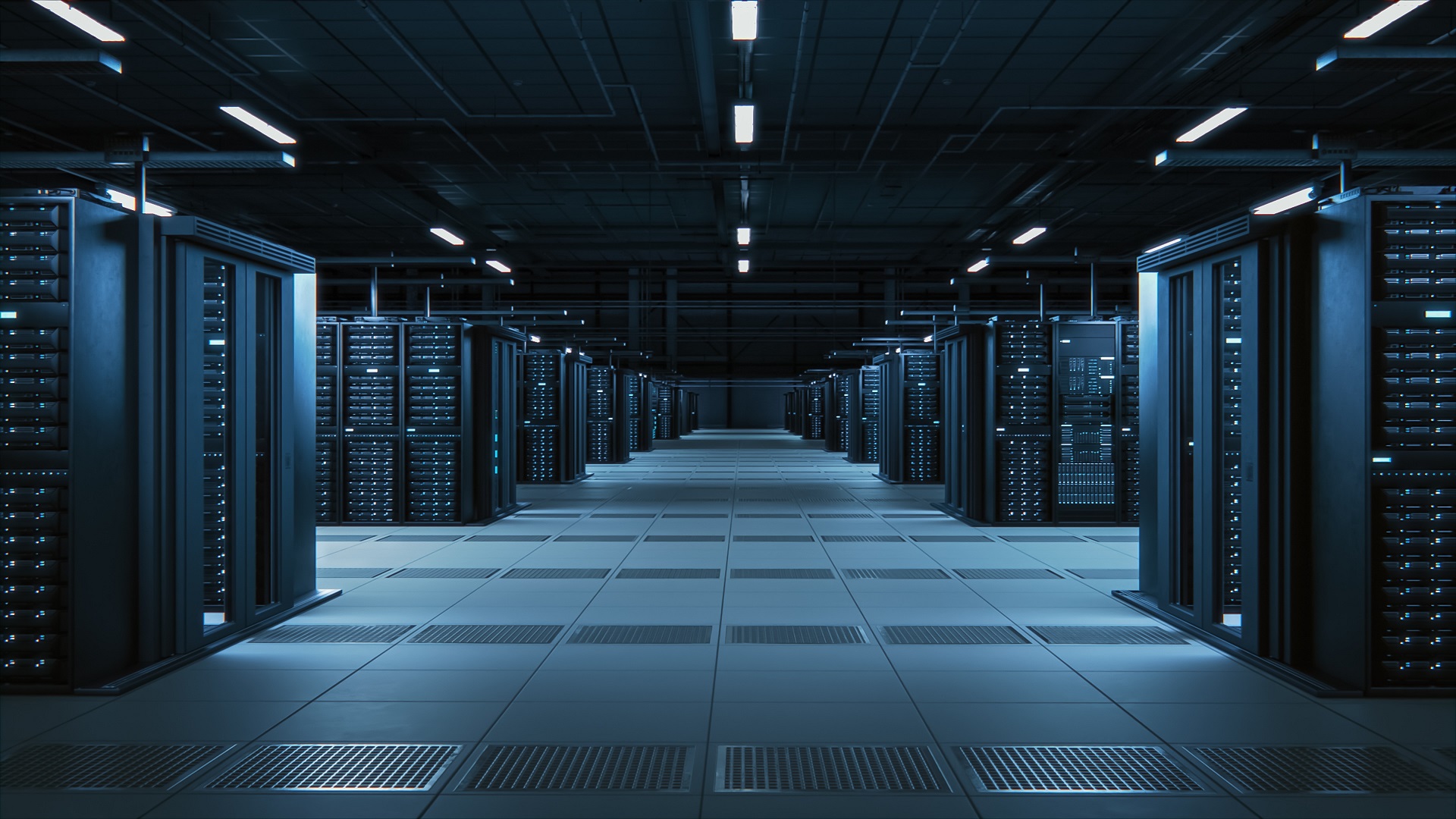
Few industries have evolved as rapidly or as dramatically as the IT industry. In less than a century, humanity went from isolated mainframes (massive, centralized computers serving entire organizations) to today’s vision of the metaverse (an immersive and interconnected digital ecosystem). Along the way, computing evolved from mechanical calculus to incredibly capable systems that are able to process billions of operations per second. But with this progress came vulnerability: our ever-growing dependency on data and the constant need to adapt our security measures as fast as we are developing the technology.
The roots of the digital era
The first ideas that led to the invention of what we can nowadays call a computer were first brought up in the 19th century. Charles Babbage introduced the concept of the “Analytical Machine”, while Ada Lovelace, considered the first programmer in history, laid the theoretical foundation of automated calculus. In the 20th century, Alan Turing brought the idea of mathematical logic in the form of a theoretical model of computation called the “Turing” machine.
After World War II, technology evolved at an accelerated pace. ENIAC (Electronic Numerical Integrator and Computer), the first general-purpose electronic digital computer, demonstrated the practical potential of electronic computation. It was soon followed by UNIVAC (Universal Automatic Computer), the first commercially available computer, which marked the transition of computing from military and academic environments into business and government.
Between 1960 and 1970, IBM dominated the entire market with its mainframes, and things only got better with the invention of integrated circuits, which only led to the miniaturization of computers. From that moment on, informatics transitioned from being just a science to becoming a global industry.
The 1970s and 1980s completely changed the paradigm. Computers were no longer a concept but an actual machine that was present in people’s homes. IBM, Microsoft, Apple, and Commodore democratized access to technology, and the emergence of graphical interfaces and intuitive operating systems made computers friendly and useful for everyone.
The birth of the Internet
Meanwhile, American researchers were developing ARPANET (Advanced Research Projects Agency Network), the precursor of the Internet. What began as a military network transformed in just two decades into a global space for communication and commerce. With the emergence of the first websites and email addresses, what we now call the ‘information society’ was born.
At the same time, this openness introduced entirely new challenges around trust, identity, and data security, challenges that continue to shape the digital world today.
The initial digital threats
With the interconnectedness of the world, the first threats also emerged. In 1971, a program called Creeper was considered the first computer virus. Initially, it was just a technological curiosity, but by the end of the 1980s, viruses such as Brain and Michelangelo began to cause real damage.
IT security was born out of necessity. Companies began to develop antivirus programs, firewalls and encryption protocols. In the 1990s, with the advent of electronic commerce and online transactions, data protection became a strategic priority.
Today, information technology is the backbone of the global economy. From banking services and hospitals to education and transportation, everything depends on digital infrastructure. Cloud computing, artificial intelligence, and the Internet have created an interconnected world, but also one that is much more exposed to cyberattacks.
Ransomware attacks, digital espionage, and data theft have become everyday phenomena. Organizations and governments are investing billions of dollars in cybersecurity, and IT security specialists are among the most sought after professionals of the moment.
However, technology is not the only vulnerability. Studies have shown that over 80% of the security incidents are caused by human errors, such as weak passwords, phishing, or negligence. Therefore, digital education and awareness of risks become essential elements of modern protection.
A look into the future
The future of IT is inevitably linked to security. Artificial intelligence already helps in detecting and generating attacks. At the same time, advancements in quantum computing may surpass the limits of current cryptography. In this situation, researchers are developing cryptography solutions to protect data in a world where processing speeds will be extremely high.
The history of information technology is not just a succession of technical advances, but also a story of adaptation, courage, and responsibility. From the mechanical machines of the 19th century to today’s global networks, information technology has established itself as a fundamental element of today’s modern civilisation.
However, as information volume increases, so does the responsibility to protect it. In a time when data is considered the new gold, IT security is essential for society’s digital survival.
Conclusion
From mainframes to global networks, IT reshaped civilization in less than a century. Its future will not be defined by innovation alone, but by our ability to secure what we create.